A commission of experts presented a 66-article plan on Monday aimed at reducing the ever-increasing health insurance contributions that Germans must pay into the system.
Germany’s health care system is one of the most expensive in the world, with state health insurance spending about €1 billion ($1.15 billion) per day on health care alone — a number that is expected to rise even higher in the next few years. Meanwhile, Germany’s insurance contributions to these state-run health insurance companies have increased by an average of around 3% this year, on top of a 2.5% increase in 2025.
But despite the increased subsidies, government insurance costs are rising rapidly. At the press conference, the Commission presented a graphic – from the Association of State Insurers, GKV – showing that at current rates, the gap between state insurers’ income and costs will increase from 15.3 billion euros in 2027 to 40.4 billion euros in 2030.
Closing the health care spending gap
The 66 proposals presented Monday are designed not only to close that gap, but to save even more. The 10-member commission, which included experts from the departments of economics, medicine and social affairs, was specifically accused of making too many recommendations, as the government was unable to implement them all due to political reasons.
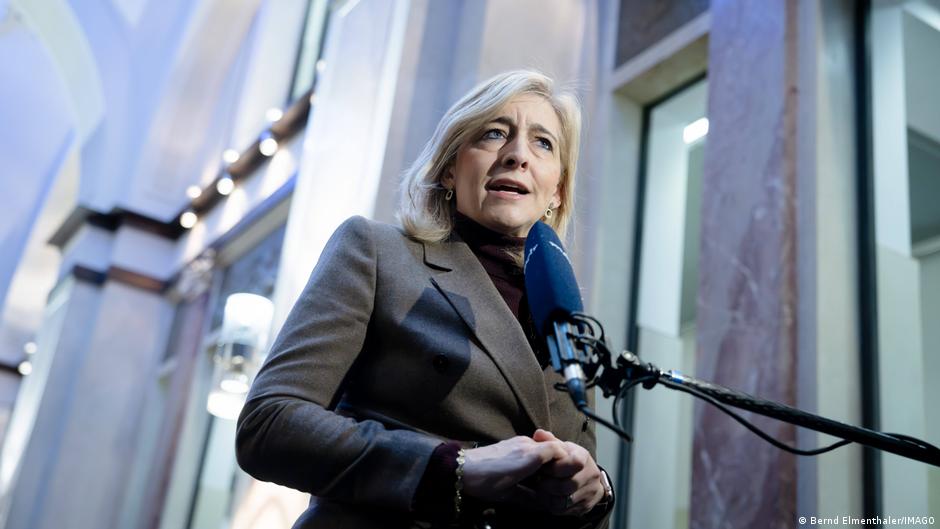
“I am grateful that the Commission has presented us with a well-stocked toolbox from which we will now take the best tools,” said Nina Warkin, federal health minister of the conservative Christian Democratic Union (CDU), at a press conference. “It’s important for me to emphasize that there will be no unilateral reforms that burden the insurers. We will not tear down the cornerstones of a connection-based health care system.”
More taxes, less operations
The commission’s 480-page report included recommendations such as:
- Increase taxes on spirits and tobacco.
- A new tax on sugary drinks. Commission member Ferdinand Gerlach, director of the Institute of General Practice and a doctor himself, said experience in other countries has shown that when a sugar tax is introduced, manufacturers voluntarily reduce the sugar content of their products.
- A new procedure that requires a planned operation—such as a knee replacement—is done only after the patient gets an independent second opinion from another doctor who has no economic stake in the decision. Germany has more such operations than other European countries.
- Patients pay more for prescribed drugs. Currently, health insurance pays for most prescription drugs.
- Female breadwinners with no children under 6 will no longer be automatically insured. This is seen as a particularly controversial recommendation, and the Prime Minister of the state of Bavaria, Markus Söder, for example, has already said that he will not implement it.
- The federal government, rather than health insurance, must pay for the health care of unemployment benefit recipients. The commission said this alone would save insurers €12 billion a year. But such a proposal may face some political opposition, as the government is currently trying to cut spending on the unemployment benefit system.
Eugen Braich, director of the German Foundation for Patient Protection (DSP), an organization that protects patients’ rights, said that 66 proposals were all found in the cabinet of various health care organizations, but that it was up to the government to agree on a clear plan.
“Now is the time for the government to show its colors,” Briesch said in a statement to Deutsche Welle. “The financial gap needs to be addressed. Sustainable health insurance cannot be done by the Finance Commission, only by the government, and for that they need a unified concept.”
Brash predicted, for example, that the proposal that the government pay for health insurance for the unemployed would cause a political row in the coalition government.
Inside and outside the German healthcare system
Germany has a dual health care system that is financed by contributions from employees and employers to health insurers. Health insurance is mandatory for the entire population, and government insurers, which cover about 90% of the population, are not allowed to deny anyone insurance. About 10% of the population choose private insurance, which often offers more coverage.
But in the past, critics have raised concerns that hospitals and doctors are encouraged to prescribe expensive and unnecessary treatments, burdening health insurance companies and driving up dividends.
Health Minister Warken promised that the commission’s recommendations would be reviewed quickly and that her department would prepare a draft to present to Cabinet by the end of the summer.
Edited by Rena Goldenberg
#Ways #Fix #Germanys #Expensive #Health #Care #System