
OXNARD, Calif. ( JTA ) — On Friday night, in Jewish homes around the world, a familiar ritual emerged: the blessing of wine, poured into a cup and passed around the table.
This ritual, multiplied during Passover, may help explain why kosher wine has held steady even as the broader wine industry struggles.
Alcohol consumption is declining in the United States and around the world. Baby boomers, the industry’s most reliable consumers, are older than their peak drinking years. Younger consumers drink less alcohol overall and are more likely to reach for craft beer, spirits or ready-to-drink cocktails when they do. In California, wineries have begun laying off workers, reducing production and in some cases closing entirely.
But in the kosher wine market, the fall looks like a slowdown.
Royal Wine, the largest distributor of kosher wine in the United States, is used to seeing double-digit year-over-year growth, according to Jay Buchsbaum, vice president at the New Jersey-based company.
“By that standard, we didn’t have a good year,” he said in an interview. “But we had an increase, while the industry fell by 12%, so we are following the trend.”
At Herzog Wine Cellars in Oxnard, California, this flexibility is evident on the production floor.
In the weeks leading up to Passover, the busiest season of the year for kosher wine, forklifts move pallets throughout the warehouse, and bottling lines run steadily as workers prepare loads destined for the holiday tables.
“Passover is to us what October, November and December are to the rest of the industry,” said Herzog winemaker David Galzignato, explaining the seasonal increase reflects the year-end rush at many wineries.
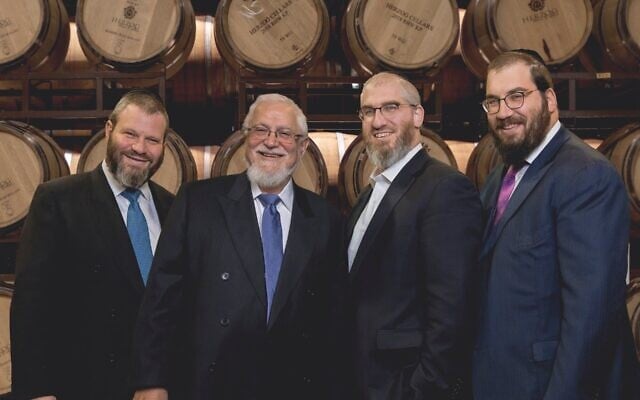
Herzog is the largest American winery of Royal Wine, which is owned by the Herzog family, an Orthodox family originally from Slovakia that has been in business for nine generations and today dominates the kosher wine market in the United States. The scale is unusual for kosher production: bottles range from $13 table wines to $300 Napa Valley releases, sourced from top vineyards throughout California.
Galzignato, an Italian Catholic who joined the winery in 2021, was brought in with a specific mandate: to raise the quality of kosher wine.
“They wanted me to choose the quality of kosher wine at the same level or better than the quality of non-kosher,” he said.
But despite overseeing every stage of production, Galzignato cannot physically move the wine he makes.
According to kosher law, from the time the grape juice is released until the wine is bottled, only Shabbat-observant Jews can handle it—a requirement that shapes everything from staff to workflow.
“It just takes a little more planning,” he said.
Even with these setbacks, the winery has continued to invest in its operations in recent years, spending more than $2 million to upgrade equipment and expand production capacity at a time when many wineries are recovering.
“When there’s a shortage, companies typically stop investing,” Galzignato said. “But the commitment to serving the best kosher wine here remains 100%.”
Stability amid widespread recession is not limited to industry giants such as Royal. At Covenant, a boutique kosher winery in Berkeley, California, the trend seems to be the same.

“We’re actually up about 5% this year,” said Jeff Morgan, Covenant’s founding winemaker.
The deal helped popularize high-end kosher wine in recent decades, but Morgan credits the very old power of his product for staying power.
“American interest in wine is in what I would call a correction phase,” he said, explaining the massive decline as the disappearance of a decades-long increase largely driven by baby boomers.
In his opinion, alcohol has never fully entered American life.
“Americans don’t have what we call a wine culture,” he said. “We are a nation that follows the corrupt.”
Jewish life, by contrast, has long been built around alcohol—not as a lifestyle choice, but as a ritual obligation.
“We Jews have a wine culture,” he said. “We are very much in need of wine.”
This obligation creates a built-in demand base that continues regardless of broader trends.
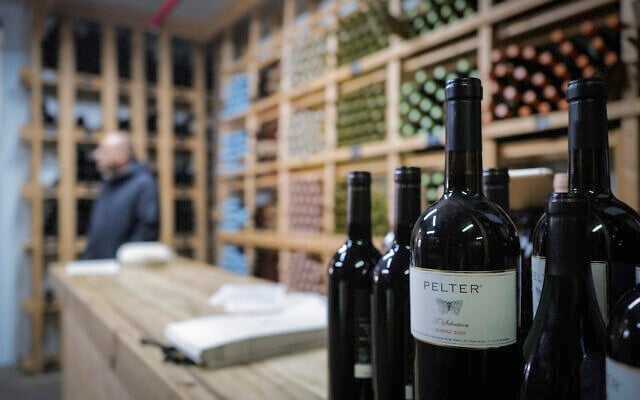
A similar dynamic is seen for those observing kosher production.
“We have our regular Shabbos and our regular holidays and life-cycle events,” said Rabbi Nahum Rabinowitz, a senior rabbinical coordinator at the Orthodox Union who has worked at the brewery for two decades. “These activities continue as normal … it really hasn’t changed that much.”
David Raven, who runs KosherWine.com, the largest retailer in the United States that sells only kosher wine, said he expects this year to bring as many as last year.
“There is definitely a slowdown … but not to the extent that the non-kosher industry is seeing,” he said. Instead of giving up wine, many consumers are adjusting what they buy — choosing less expensive bottles or stopping the collection.
Still, he said, the traditional role of wine sets the floor for demand. “Nobody’s going to sit down for their Seder and smoke four pairs,” he said. “You need four cups.”
The industry’s goal should be to adapt to lighter, more accessible wines and new marketing strategies aimed at younger drinkers, said Ernie Weir, co-owner of Napa Valley’s Hogfin Cellars, founded in 1979.
“We are not affected by general trends, so we have to deal with them,” he said.
The kosher wine business may have been spared a bit of a downturn in part because its consumers are still embracing the trends that reshaped the broader market years ago.
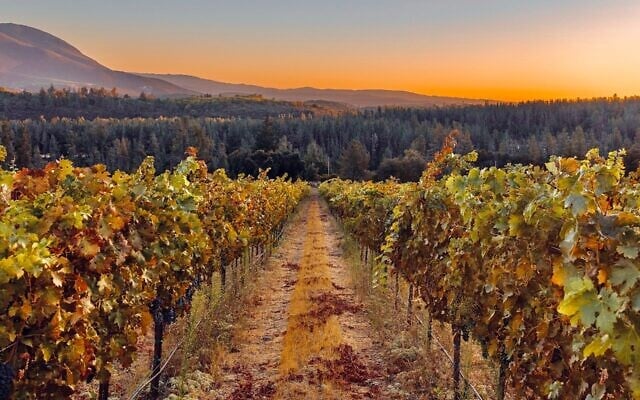
For decades, kosher wine in the United States has remained associated with sweet, low-end bottles even as the general market has moved toward dry, high-quality wines. This left room for growth as customers began to trade.
Buchsbaum argued that the kosher wine business has been spared some of the worst declines in part because its consumers are “behind the general consumer” — a lag that has worked to the market’s advantage in this case.
“In the past, an Orthodox or kosher observant would only drink a bottle of wine at the table on Friday night,” Buchsbaum said. “Now he has two or three bottles on the table on a Friday night. Wow. He can have one or two a week with his other meals. This consumerism has grown in particular.”
At the same time, another type of kosher wine consumer has fallen away: less observant American Jews who don’t strictly keep kosher on a day-to-day basis but still buy kosher wine, hire kosher caterers and observe certain social norms around holidays and life-cycle events.
Buchsbaum described a mid-20th-century American Jewish landscape in which almost every community had a kosher butcher and caterer because even many non-Orthodox families expected bar mitzvahs, weddings, and other celebrations to be kosher. The world contracted rapidly, he said.
The result is a smaller but more engaged core market—one that spends more per household even as regular participation declines.
“Current kosher consumers … have picked up a lot of that slack,” Buchsbaum said.
The shift in buying kosher wine reflects a broader shift in American Jewish life. As integration and desegregation have changed society, the more observant population has played a larger role.
Another broader trend is causing optimism among industry insiders: the growing demand for kosher wine outside the Jewish community.
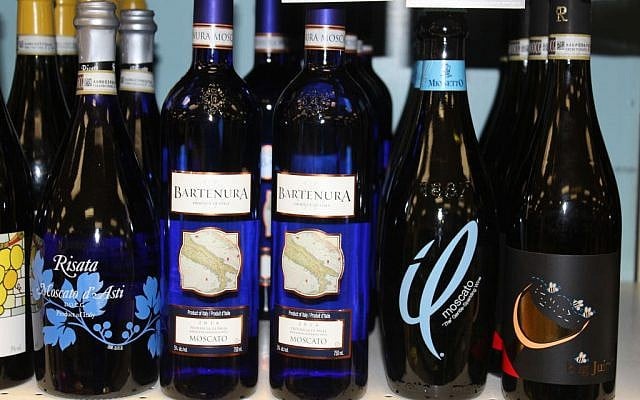
Perhaps the best example is the Royal Bartenora label, which is the best-selling premium moscato in the United States, a sweet, aromatic white wine, selling nearly 10 million bottles a year. Buchsbaum estimates that at least 15% of Bartenora’s customers are Jewish, with the blue-bottled wine developing a unique fan base among black consumers.
Buchsbaum also said that Royal has increasingly found customers among Christian Zionists who are drawn to Israeli wines for religious and cultural reasons. In states like Texas, he said, visitors have become a meaningful and growing segment of the market.
Royal is selling to Total Wine, one of the country’s largest wine chains, which has expanded its Israeli wine offerings and is actively promoting it to a broad, largely non-Jewish customer base.
“They have a wide selection of Israeli wines,” Buchsbaum said, noting that the store maps Israel’s wine regions and hosts tastings to introduce the category to new consumers.
It also helps that Israeli producers compete with established wine regions in Europe and California, receiving high scores and international awards. This recognition helped change the perception of kosher wine from a religious product to a quality product.
“They’ve been making wine for 5,000 years, and they’re just getting better at it,” said Josh Greenstein, executive director of the Israel Wine Producers Association.
#Americans #drink #alcohol #demand #kosher #remains #strong