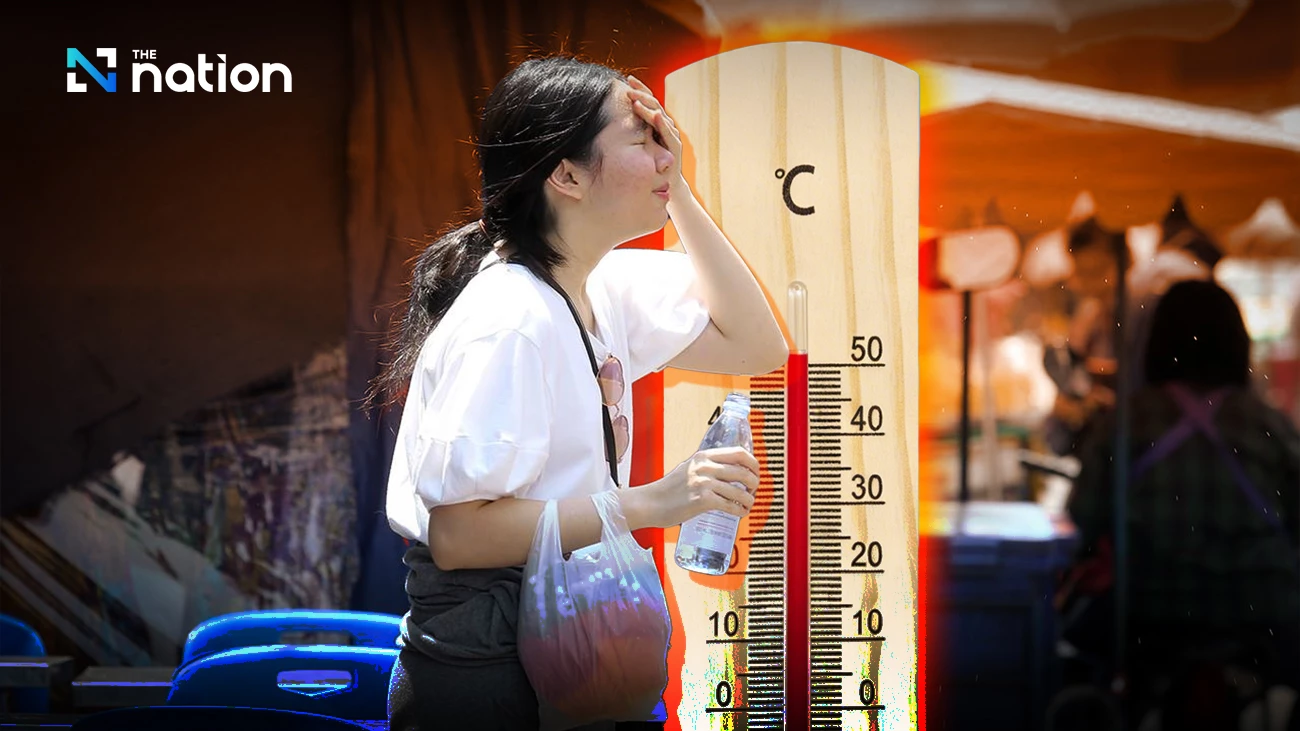
What does 52 degrees Celsius feel like?
Many people may find it difficult to imagine what 52 degrees Celsius would actually feel like.
Try to think about opening the door of a car that is parked in the afternoon sun, before the air conditioner starts working.
This is the temperature inside the closed car, which may rise to 60-70 degrees.
But a temperature index of 52°C outside the car feels close to standing in front of an oven set to 50°C.
But unlike standing by the oven, people are not left alone.
They walk, ride motorcycles, deliver parcels, sell goods, and work on construction sites.
These activities generate another layer of heat inside the body.
There is another clear comparison.
A typical dry sauna is often set at 70-90°C, but the humidity is very low, so the body can evaporate some sweat.
The outdoor air combines both heat and high humidity on a day when the temperature index reaches 52 degrees Celsius, which means that the body can evaporate very little sweat.
In terms of health effects, it can be more dangerous than a sauna.
Even more worryingly, this level is simply not “hot but tolerable”.
This is the point at which the body’s cooling system begins to fail.
What signals does the body send? From pain to fever
The classification of these stages of heat-related illness is based on the system used by the US Centers for Disease Control and Prevention (CDC), the National Oceanic and Atmospheric Administration (NOAA), and the National Center for Biotechnology Information (NCBI), which explains that heat-related illness does not occur all at once, but develops over time and develops as a group of severe symptoms.
Stage 1 Heat cramps
The first stage is fever pain.
It occurs when the body loses large amounts of sweat and electrolytes, causing the muscles, especially in the legs and stomach, to contract painfully.
The CDC explains that this condition is common among people who exercise or work hard in hot conditions and drink plain water without replacing electrolytes.
Symptoms to watch for include painful muscle cramps, especially in the legs and stomach, heavy sweating and fatigue.
At this stage, the body can usually recover if the person stops to rest and immediately drinks water and electrolytes.
But if they force themselves to persist, they may progress to the next stage more quickly.
Stage 2 Heat exhaustion
Heat exhaustion is the body’s response to losing large amounts of water and electrolytes through sweat.
It usually occurs in conditions of extreme heat and high humidity, and if not treated immediately, may develop into heat stroke.
Symptoms of heat exhaustion include several warning signs: severe headache, nausea, vomiting, dizziness, lightheadedness, weakness, rapid heart rate, pale, cold skin in the mouth, extreme fatigue, as well as decreased and dark-colored urine.
What makes this scary is that, according to the NCBI, the transition from heat exhaustion to heat stroke can happen in a very short time if the person stays in the sun and does not take care of it.
Waiting in the hope that “it will pass” can be a seriously dangerous mistake.
Stage 3 heat stroke is a life-threatening emergency
According to the CDC, heat stroke is the most severe heat-related illness.
It occurs when the body can no longer control its core temperature.
The cooling mechanism fails, including the cooling system.
Body temperature can rise to 41-42°C or higher in 10-15 minutes, and without immediate treatment, it can cause death or permanent disability.
Important signs of heatstroke that require immediate attention include body temperature above 40 degrees, hot, red, dry skin without sweat, severe headache, confusion, slurred speech, changes in behavior, strong and rapid heartbeat, rapid breathing, and most importantly, possible loss of consciousness.
Thailand’s Department of Health insists that when someone shows symptoms of heatstroke, 1669 should be called immediately.
While waiting for the ambulance, the patient should be moved to the shade, unnecessary clothing should be removed, and the body should be cooled with cold water, especially the back of the neck, armpit and groin, while at the same time using a fan to help release heat from the body as soon as possible.
What not to do when someone has heat stroke is equally important: Do not give water if the patient is unconscious or semi-conscious as this can cause suffocation and do not use blankets or anything else to cover the body.
Who has the greatest risk?
Heat does not affect everyone equally.
The Department of Health says certain groups are at significantly higher risks than the general public and need special care during high heat index times.
They include:
Elderly people aged 65 and over are the first group to watch closely because their bodies adjust more slowly to temperature changes, and they become dehydrated more easily.
In 2024, the Centers for Disease Control said the elderly were the group with the highest number of heat-related deaths.
Young children and infants are another vulnerable group because their body’s cooling systems are not yet fully developed.
Children can’t always tell if they feel hot or uncomfortable, and the risk may develop more quickly than adults.
The Department of Health has specifically warned that children should never be left in a locked car, as the temperature inside rises rapidly within minutes.
People with chronic diseases such as heart disease, high blood pressure, diabetes, kidney disease and obesity are also at risk because these conditions affect blood flow and the body’s ability to release heat.
In addition, certain medications used by these patients, such as diuretics, blood pressure medications, antipsychotic medications, and some antihistamines, can also make it harder for the body to cool itself.
Outdoor workers are a group that is often overlooked when discussing the impacts of warming.
These include construction workers, food and parcel delivery drivers, traffic police, security guards, vendors, farmers and workers in the manufacturing sector.
These people have no choice to go outside and often work for several continuous hours during the hottest part of the day.
People who live in houses or apartments are also at risk of poor air quality and no air conditioning.
In crowded communities, row houses or older urban buildings, the temperature inside at night may be higher than outside because the concrete absorbs heat during the day and releases it slowly at night, leaving no real break from the heat.
According to survey data on heat illness and death between 2019 and 2023, there will be 131 total deaths, or an average of about 26 per year, and the number of patients is increasing.
In 2024, just in the first two months of the hot season, March and April, there were already 30 deaths, compared to 37 in the four months from March to June in 2023.
This means that the death rate has obviously accelerated.
This number may still be lower than reality, because many more patients enter the health system with heat-related symptoms such as heart failure, kidney failure or other disorders, but are directly registered under another main diagnosis instead of Heat Stroke.
In the past, many Thais might have said, “Thailand’s hot season is like that.”
But what has happened over the past few years seems anything but normal.
Many countries around the world have begun to introduce heat warning systems on par with typhoon or flood warnings, as extreme heat creates a new form of public health disaster.
#Thailands #degree #heat #index #warning #signals #public #health #threat