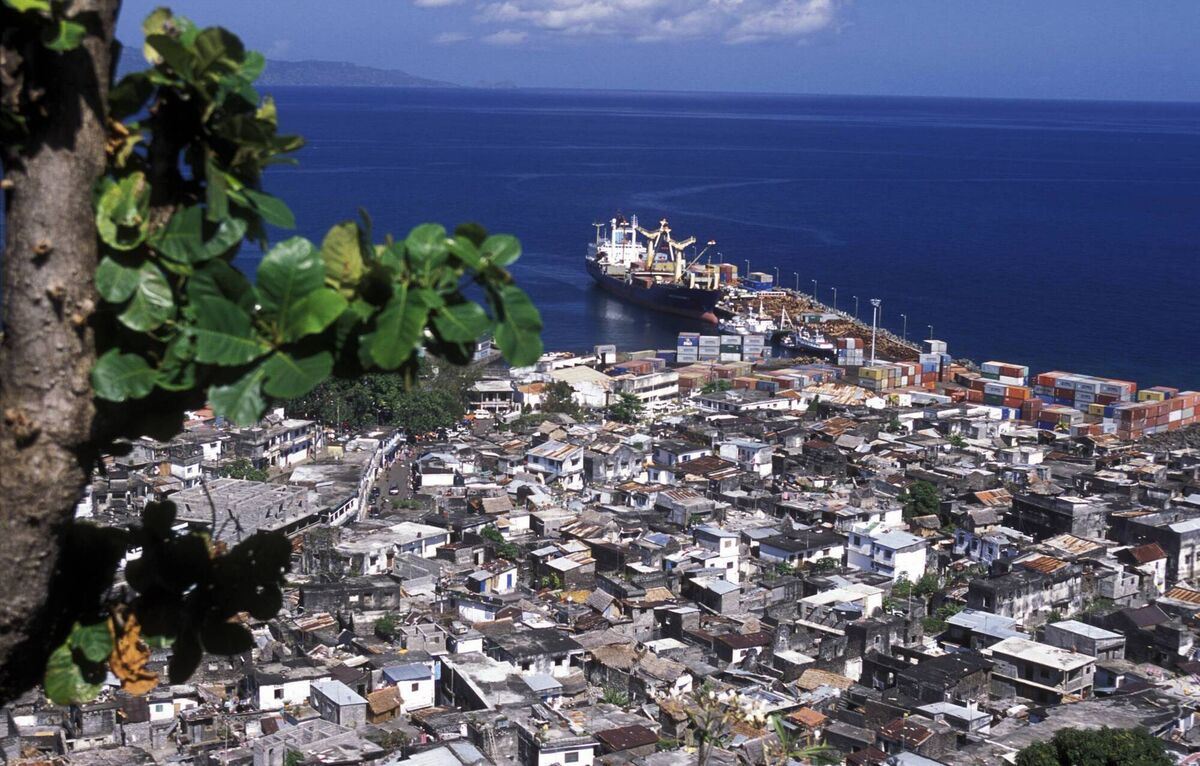
If you asked the average person to point out the small independent island of Anjouan on a map, or better yet, if you asked Irish influencers to advertise the fruits of these fake gaming licenses, you would be left disappointed or perhaps a little pleased with their efforts.
Its actual location lies between Madagascar and the southeast coast of Africa, where it includes one of the three largest islands of the Comoros Union, a former French colony that gained independence in 1975. Comoros is the third smallest country in Africa, slightly larger than its distant neighbor Seychelles.
While largely unheard of, political instability and regulatory agencies have led to the proliferation of unlicensed sports betting and online gambling websites in Ireland. In 1997, Anjouan itself claimed independence from its neighboring islands following political unrest in the Comoros. Shortly thereafter, the Anjouan separatist government established its own financial regulator, the Anjouan Offshore Financial Authority (AOFA).
However, efforts to legitimize the new regulatory body were marred by a series of scandals, including allegations of money laundering and attracting criminals, after the World Bank declared that the establishment of offshore banks in Anjouan was illegal.
In 2002, Anjouan joined the Comoros, officially removed from AOFA regulatory status after banking laws. But to this day, the AFA maintains a register of dozens of financial companies, including banks, insurance companies, and especially gambling sites.
On its website, AOFA describes itself as “renowned for its favorable regulatory environment”. In 2022, the Central Bank of Comoros issued a stern warning against AOFA, labeling it a “fictitious” entity that issues licenses and illegally offers banking and financial services through websites and online platforms.
Despite these warnings, many gambling websites continue to use Anjouan-issued licenses as a badge of legitimacy, including those increasingly targeting Irish consumers.
In addition to being illegal, unlicensed betting companies often have terms and conditions that no legitimate regulator would approve of, and the chances of losing money are also high.
Online casino and sports betting provider Gambana.com is owned and operated by JJAM Holdings Ltd, a Central American company registered in Belize. However, the website itself has been licensed by the AOFA since November 2025. Importantly, Gambana does not have a license to operate in Ireland.
But its illegal operations in Ireland have failed to deter many of the biggest influencers among online sports circles from promoting the company.
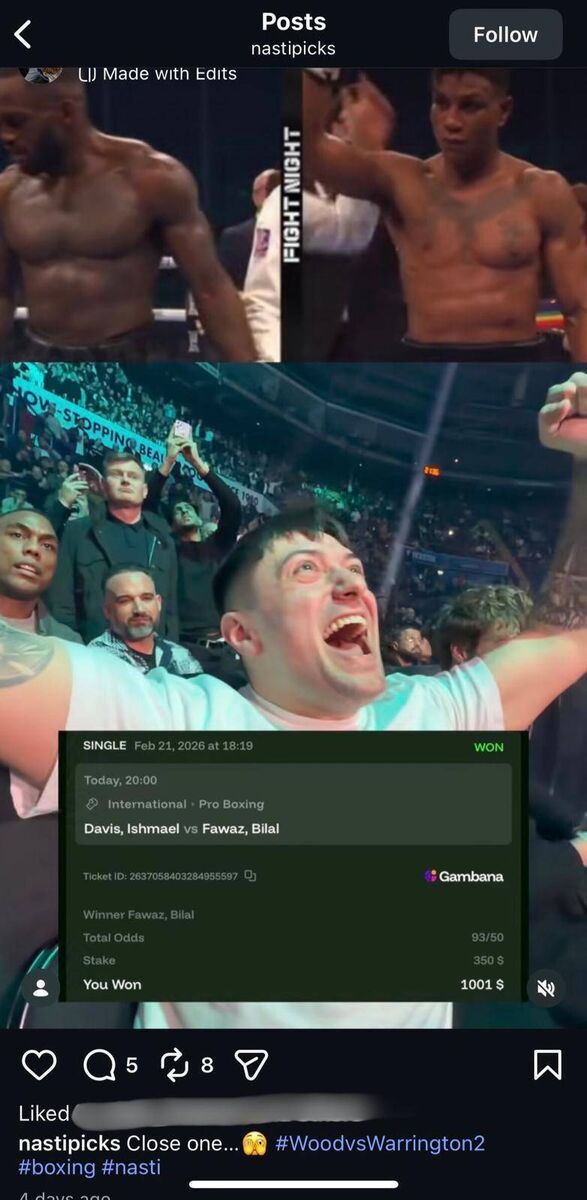
One such influencer is 26-year-old Jonathan Finley, better known by his online persona, Nasti_2k. The Dublin-based social media personality has more than 670,000 followers on TikTok and another 275,000 on Instagram. He also runs a channel on the encrypted messaging app Telegram, which is dedicated to gambling.
Known for flaunting his lavish lifestyle on his social media, including first-class flights and Premier League matches, Mr Finley has repeatedly promoted Anjouan-licensed Gambana on his platforms, endorsing it with influential lawyers. Last month Mr Finley had a business partnership with the betting website.
“Our client discloses its affiliate relationship with Gambana to its audience,” said Mr. Finley’s lawyer, Lovell Partners.
“Our client makes it clear that he is not a professional gambler or financial advisor, to ensure that viewers are not misled by his content or expertise,” they added.
Last year, Mr Finlay was the subject of an investigation by the Central Bank of Ireland after he promoted an informal financial trading platform, T4Trade.
Registered in the Seychelles, T4Trade said it does not target EU residents, as it does not have the necessary licenses to operate in the jurisdiction.
Irish influencer Jonathan Morley went even further in promoting Gambana. His account on X (formerly Twitter) had a Gambana affiliation badge, which indicated to his more than 26,000 followers that he was affiliated with the organization.
An avid Liverpool fan, Mr Morley has amassed over 55,000 followers on Instagram and over 630,000 followers on TikTok.
However, speaking with Mr Morley said he was recently made aware that Gambana was operating without a license in Ireland after reading an article about another content creator the company also promoted.
“Since then, I have stopped growing the company and was forced to close the partnership as soon as possible,” Mr Morley said.
Mr. Morley also removed the Gambana affiliate badge from his X account.
However, social media personality and professional tipster Rob Hengen did not comment when contacted. Regarding his promotion of Gambana.
Operating online under his own company name, Pro Sports Consulting (PSA), Mr Hennigan has more than 1 million followers on his various social media platforms and, like Mr Finley, enjoys a lavish online lifestyle of private jets, lavish holidays and celebrity hang-outs.
PSA also runs a popular channel on the encrypted messaging app Telegram, which has amassed more than 90,000 subscribers. In this, the company has promoted Gambana several times, declaring that it has better conditions than other licensed betting companies such as Bet365.
On January 18, the PSA inner circle Telegram channel wrote: “Best problems in Gambana.
“Odds difference between Bet365 and Gambana of 2/6 (1.67) and 23/20 (2.15).” PSA markets itself as the world’s largest and most trusted tipping community, claiming 15,000 monthly paying members. The company offers a premium membership for €149 a month, with the cheapest, standard rate costing €19.
In January, PSA submitted its 2024 financial statement to the Companies Registration Office, but the documents were returned to the company. Updated financial statements have not yet been submitted.
In the return document, PSA reported a profit of 718,000 euros for the 2024 financial year, with a profit of less than 2 million euros collected.
The returned accounts also showed the addition of freehold property worth a million euros. Land Registry records show that PSA bought a five-bedroom beach house at Silver Beach in Gormanston, Co. Meath, with an asking price of €885,000. The Land Registry shows that Pro Sports Consultancy Limited took ownership of the property in May 2024.
Online gambling site Rainbet says it is recognized among the “best crypto casino options”. It is the brand name of RBGaming NV, located in Hamchako, Mastamodo, Autonomous Island of Anjouan, Union of Comoros.
On the website, customers can bet on Ireland’s UEFA World Cup qualifying matches, Ireland U18 friendlies, and U21 European Championship qualifiers.
Rainbet does not have a license to operate in Ireland, and even if it tried, it would likely struggle to get one.
Deep in its terms and conditions, Rainbet bans all VPNs that hide the customer’s true location, allows customers only 72 hours to challenge a bet and caps winnings at $50 from welcome bonuses or affiliate codes, regardless of how much is fined.
In addition, Rainbet says that if it is found responsible, it will pay no more than $500, regardless of how much the customer lost.
In recent years, the Rainbet logo has been plastered across social media videos and advertisements targeting Irish customers, particularly in online sports circles.
“It’s no wonder these guys are targeting such online communities,” says Dublin blogger and author Paddy Keogh.
“It is full of young people, many of them under 25, who are deeply invested in football and have an emotional attitude.” In 2023, Mr. Keogh founded AttackingFootball.com, a sports media website that he regularly contributes to with a team of other international writers.
In September last year, Mr Keogh wrote online about the rise of RainBeat ads in online sports circles, warning readers to avoid the site and highlighting its lack of regulatory oversight.
A day later, his website was the target of a distributed denial-of-service (DDoS) attack.
A DDoS attack is a malicious attempt to disrupt the normal operation of a website by flooding it with artificial internet traffic. This can cause the website server to become overwhelmed, resulting in a denial of service for actual traffic.
Mr Keogh said: “We were getting traffic from random countries .
“Suddenly, it was traffic from Zimbabwe, Yemen and other places where no one would read the website.” Mr Keogh reached out to RainBeat when the DDoS attack began, repeatedly asking if the gambling site was involved. He never got an answer.
Mr Keogh added: “As a result of the attack, the website was delisted from Google, which affected it widely.”
“All this happened in September, but even now, I’m still forced to block traffic from certain countries. I’m still dealing with bots.”
You in a statement the Gambling Regulatory Authority of Ireland (GRAI), which takes over the gambling licensing role from the Revenue Commissioners, has confirmed that it is illegal to operate in Ireland without a betting licence, either issued by the Revenue, or by the GRAI.
“Illegal gambling is associated with a number of risks,” the GRAI warned.
“You run the risk of having your personal information and financial information compromised, and all the protections that apply when you gamble in a regulated market are removed.” The GRAI added that providing a betting activity without a license is a “serious offence” and can lead to up to eight years in prison on conviction.
“The seriousness of this crime reflects the dangers associated with the black market.” Rainbit and Gambana did not respond when contacted .
#Gambling #sites #fake #licenses #target #Irish #users #influencers #grow