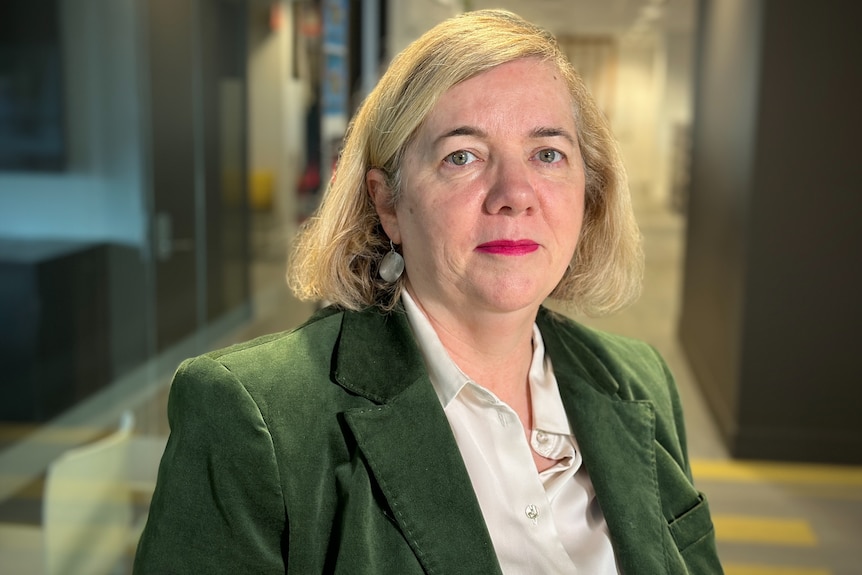
Amidst the unrelenting pressures of caring for three young children and an elderly and ailing mother, Ella Hillman strives to make sure everyone in her family gets the health care they need.
The 36-year-old public servant lives in a two-income household, but said cost-of-living pressures have forced her to downsize.
“We have a mortgage and we’re really struggling to pay for everything we need. My children don’t have complex medical problems, but they do have medical problems – all three of my children have food allergies that we have to see specialists regularly,” she said.
“It feels like every year it gets tougher and tougher, insurance premiums go up, everything goes up, and we have to make these difficult decisions about — do we delay this appointment?”
Those decisions are even tougher when it comes to her 60-year-old mother, Kathy, who has a complex cluster of health issues, lives in public housing and is on a disability pension.
“He’s struggling every day just to meet his basic needs, let alone preventive health… These are things that are bubbling under the surface but there’s no money to fix them and eventually they become big problems,” she said.
“But at that time, the person’s quality of life is greatly reduced, it will cost the health system more to solve the problem. It doesn’t make any sense…and it’s a daily struggle.“
One in two Australians missed out on the health care they needed last year mainly because they couldn’t afford it, according to a new report by the top health care consumer group.
The Consumer Health Forum (CHF) surveyed more than 5,100 Australians, with the results revealing a health system that is increasingly unaffordable.
The survey showed a pronounced disparity that means Australians with low incomes, chronic illnesses or those from diverse backgrounds are more likely to miss out on care.
“Australians still trust the care they receive. What they don’t trust is whether they can afford it when they need it.”
“This gap between trust in care and trust in competence is the fault line of our health system. If people are delaying care because of cost, then universal care exists on paper but not in practice.”
55 percent of people delay taking or getting medication
The report provides a snapshot of consumer sentiment in 2025, before the impact of the recent escalation in the Middle East conflict further constrains household budgets.
The report found that about 50 percent of people missed seeing a doctor or dentist when they needed to in the past year, skipped a recommended medical exam or treatment, or didn’t fill a prescription or didn’t take the medicine when needed.
The main reason people didn’t access health care was cost, with 55 percent of people not filling a prescription or not taking medicine when needed, up from about 47 percent last year.
Nearly 50 percent of people who skipped recommended medical tests or appointments said they could not, compared to about 44 percent in 2024.
While 67 percent of people who didn’t see a dentist when they needed to said it was because they couldn’t afford it.
More broadly, the report also sees financial stress as a key social determinant of health.
It found that more than 35 percent of people will experience at least one financial hardship or situation by 2025, with some having to ask family and friends for financial help, giving up food or leaving items to go.
While Australians showed moderate confidence in the healthcare system, only one in three felt confident they could afford care if they became seriously ill.
“Usage is not a short-term economic issue. It determines whether someone sees a doctor, fills a prescription, gets their teeth straightened, or waits and hopes the problem will go away,” the report says.
“When care is unavailable, the burden doesn’t go away. It shifts across families, communities and the public system. It’s not inevitable. It reflects choices about how health care is financed, priced and prioritized.”
Consumer Health Forum of Australia CEO Elizabeth Devaney says poor health outcomes have an impact on national productivity.
((Prepared by: Daryl Torpey)
The report also found that low-income people who have chronic illnesses, speak languages other than English, or who are LGBTQI all have higher risks of meeting health needs.
According to the survey, the cost of private health insurance was the biggest reason why people did not have it, reaching 60 percent of coverage.
Although having private health insurance can improve the level of care a person receives, it can unintentionally reinforce health inequities for those who cannot afford it, the report found.
Australians ‘very clear’ about what they expect from the government
Dr Devaney said Australians were “very clear” about their priorities for change, listing more health workers, lower costs of care and medicine and better access as their top areas for immediate reform.
She said the upcoming federal budget in May was an opportunity to address some of these concerns.
“The purpose of this survey is not just to describe the problems. It is to help governments and health leaders see where reforms are coming – and where they are not.”
she said
“If we want a healthcare system that people can trust, the system must remain both high quality and genuinely affordable.”
Health Minister Mark Butler pointed to measures the federal government has implemented since coming to office to make health care more affordable, such as reducing the cost of drugs in the Pharmaceutical Benefits Scheme (PBS) and an early commitment of $8.5 billion to expand bulk billing and strengthen the workforce.
“When we come into government in 2022, it’s never been harder or harder to find a doctor,” Mr Butler said.
“Bulk billing was free after a decade of cuts and neglect to Medicare. That’s why strengthening Medicare is a key focus of our government. Albania’s Labor government has made the largest investment in Medicare since its creation more than 40 years ago.”
For Ella Hillman, who is also a volunteer consumer advocate for CHF, the change is crucial, especially for those living on government payments.
“These people are literally living on the bread line…there needs to be health care in the public system that’s free and accessible,” she said.
“It’s almost like all the decisions that are made by policymakers and government officials treat them as a partner, and say… We don’t think you deserve a quality of life that’s equal to these other people who work and generate money through taxes.”
“To be honest, I’m really sick of it. And I think we need serious action to bring equity to the health care system.”
#sick #Australians #priced #health #care #system