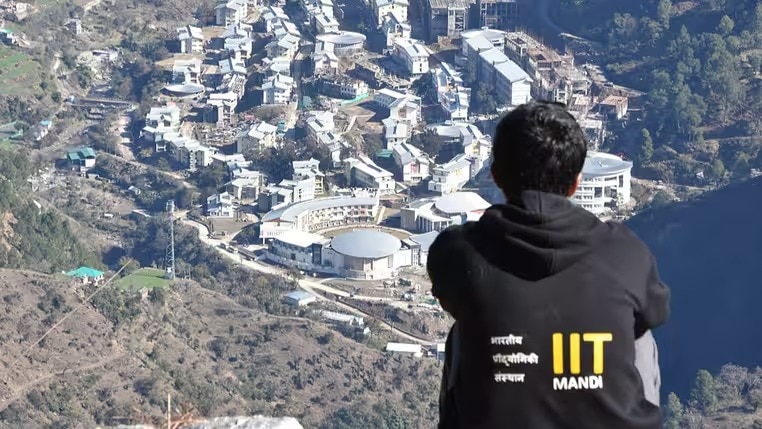
Indian Knowledge Systems, this is the framework that IIT Mandi is now considering as it seeks answers to one of the most pressing concerns on India’s top campuses: student mental health.
Big ranks, high packages and research papers, IITs are known for. But in the latter, another truth emerged. India’s top engineering institutes are facing a mental health crisis. In the last five years alone, about 65 student suicides have been reported in IITs. But the crisis is more than this number. It is also seen in the stress, anxiety, emotional exhaustion and silent stress that many students go through in some of the most demanding academic spaces in the country.
The issue is not limited to IIT campuses. According to NCRB data in Parliament, 13,089 students died by suicide in India in 2022, up from 12,526 in 2021.
It’s about the stress that won’t stop, the anxiety that sits through lectures and lab hours.
The broader picture of youth mental health is also worrying.
According to UNICEF India, 7.3% of youth between the ages of 18 and 29 suffer from mental illness overall, while an NCERT survey (2022) found that 11% of students experience anxiety and 14% experience extreme emotions and mood swings.
At a time when the Supreme Court and the government are looking for ways to respond to the crisis, counseling, screening and student support systems are needed now.
In all this, IIT Mandi takes a path connected with ancient Indian traditions. When the instructions are strictly followed. The institute in the Himalayas works on Indian knowledge systems, using practices such as yoga, meditation, mantra and Indian classical music to continuously support the well-being of students.
In the last five years, IIT Mandi’s record was the best in terms of the lowest number of student suicides. Only one such incident was reported, reflecting the impact of a more comprehensive approach by the Institute.
Music, mind and mental well-being
Practices like yoga and meditation, once central to the Gurukul tradition, have now found a place on the IIT Mandi campus. At the institute, questions about consciousness, cognition, and mental well-being are treated not only as abstract philosophical concerns, but as the subject of active academic inquiry.
Explaining the approach, IIT Mandi Director Lakshmidhar Behra said: “The Institute’s work on Indian Knowledge Systems (IKS) is rooted in a revision of knowledge frameworks that ancient India was deeply involved in, but which modern science is only now seriously examining.”
The IKS framework here extends beyond yoga and meditation.
It includes Indian classical music, ragas, instrumental sounds and even natural sounds, some of which have now been brought into the wider learning environment at the institute.
For many students, the impact is already noticeable. Many say that even an hour’s daily session helps them reduce stress, regain focus and manage the mental load of academic life more effectively.
To examine this more systematically, IIT Mandi also conducted a focused study on the effects of Indian classical music on the mind, and the findings provided important insight into how traditional sound-based exercises can affect attention, emotions and cognitive stability.
The IIT Mandi study, conducted in collaboration with IIT Kanpur, sought to examine how Indian classical music affects the brain under controlled conditions.
While listening to music while studying is common, this study approached the question through a systematic scientific framework.
The study involved 40 healthy male participants aged between 19 and 29, with an average age of 23. None had formal musical training, and all were screened to rule out hearing, neurological or drug-related conditions.
Each participant was exposed to Indian classical music for about nine minutes per session, while their brain activity was recorded using an electroencephalogram (EEG), a technique that captures electrical activity in the brain.
To establish a clear baseline, the researchers compared brain activity during music exposure to periods of restful silence. Two ragas, Raga Darbari and Raga Jogya, were chosen for the experiment based on their distinct emotional profiles.
The findings indicated measurable changes in brain activity. Raga Darbari was associated with better concentration and a calm mental state, while Raga Jogya supports emotional regulation and reflective thinking.
Both ragas affected transient but significant neural patterns associated with attention, emotion, and mind movement, indicating a shift toward more stable cognitive states.
Research suggests that specific soras (notes) in Indian classical music may play a role in elevating mood and stabilizing mental processes. The researchers also noted that these effects were consistent in repeated trials, including follow-up observations with female participants.
They also pointed out that previous studies have indicated the potential supportive role of raga-based interventions in the context of hypertension and type 2 diabetes, although such approaches are not presented as sole treatments.
IIT Mandi is betting on something old and internal
These findings suggest that music not only affects mood, but can also affect cognitive abilities. And among various forms of music, Indian ragas seem to have the strongest influence on attention and mental processing.
Speaking to India Today, director Lakshmidhar Behra said, “Mental health has become an epidemic. We don’t know how to treat it. At IIT Mandi, we have adopted a different approach through classical music, yoga, meditation and chanting of mantras.”
Professor Behra, on how Indian classical ragas affect brain function, explained that this type of music can help with attention, emotional regulation and mental stability.
For Ian Garg (21), a B.Tech student in Microelectronics and VLSI at the School of Computer and Electrical Engineering, the academic pressure is constant, but new interventions on campus have made a difference. He says that exercises like yoga, meditation and exposure to music sessions help him slow down in an otherwise fast-paced routine.
“There’s always something to finish, assignments, labs, schedules. It gives a break in between sessions. It helps to clear the mind and come back with better focus,” he says, adding that even the short breaks built around such exercises reflect how he manages stress and focus.
“It relaxes us and takes away the stress of the day,” says Garg.
Globally, sound and frequency are taken into account
IIT Mandi’s findings do not emerge in isolation. Several other studies have also pointed to the role of raga music in improving cognitive performance and mental focus.
A study by Karuna Nagarajan, available on ResearchGate, found that people who listened to raga music performed better on attentional tasks than those who listened to pop music or remained silent.
Improvements in memory-related tasks also increased after exposure to ragas.
“I believe that all the arts can play a major role in helping mental health, but Indian classical music is especially important because of various factors such as its philosophy of artistic experience as a cathartic exercise (rasa), its improvisational, in-time nature, its therapeutic movement effect (raga), and its deep connection to natural rhythms and to Indian classical music and seasonal music. Mind, body stress relief and soul relaxation, it’s for mind, body and spirit. A therapeutic experience,” said Dr. Srinivas Reddy, Professor of South Asian Studies, Naintha University.
On platforms like YouTube, such content continues to rack up millions of views, reflecting the public’s widespread interest in music as a tool for mental well-being.
Across cultures, music has long been associated with the mind, emotions and inner balance. Some voices are also associated with spiritual and reflective states. Binaural beats, ambient sounds and meditation music are now commonly used for relaxation and concentration.
“When I learned music, I never recorded anything or wrote anything down. It was a guru-faced, one-on-one training that fostered deep human connection, creativity, dedication, and focus. It was a complete experience that included mind, body, and spirit. If we develop this kind of traditional teaching in our modern classrooms, I believe that it will ensure a radiological growth in the psychological growth of every student.”
As the conversation about student mental health grows, it raises an important question: If music can affect attention, mood, and concentration, should institutions that nurture young minds take such practices seriously?
– end up
#IIT #solves #mental #health #crisis #students #ancient #Indian #knowledge