We all know that exercise is good for us.
Moving our bodies improves our mental and physical health, with even a small increase in physical activity leading to significant benefits.
New Australian research, published today in PLOS Medicine, highlights the importance of staying physically active for women in their 40s, 50s, 60s and 70s.
Researchers found that middle-aged women who exercised regularly cut their risk of premature death in half.
But lead researcher Ben Nguyen of the University of Sydney said almost half of Australian women aged between 45 and 64 simply weren’t getting enough exercise.
“It’s important to stay physically active at this stage of life because it can provide long-term health benefits,” she said.
“It reduces the risk of death [early] In half, especially if they are regularly active for many years.“
So what does the study tell us?
And what’s in store for women – and Australians more broadly – as we approach middle age?
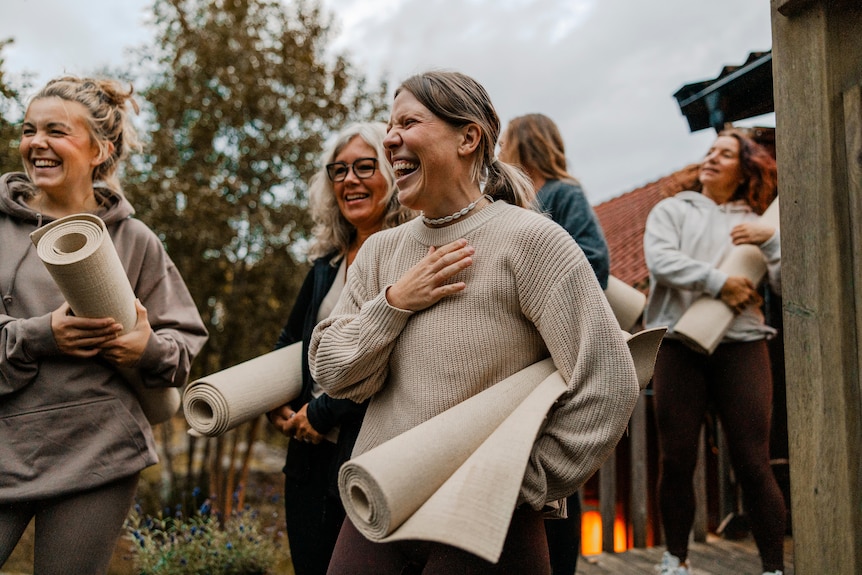
Most Australians do not meet physical activity guidelines. ((Getty Images: Janner RF)
What are the study’s findings and limitations?
The researchers used data from 11,169 women born between 1946 and 1951 enrolled in the Australian Longitudinal Study of Women’s Health (ALSWH).
Internationally, the ALSWH – launched in 1996 – is one of the largest studies of its kind, tracking the health and well-being of more than 58,000 Australian women.
Most studies on physical activity use data from a single point in time, but Dr. Nguyen’s team examined data from women ages 45 to 70 for 15 years.
This enabled them to compare the health of women who exercised regularly and reported not, in a similar way to a randomized controlled trial (RCT), but over a longer period of time.
They found that the incidence of death was 5.3 percent in women who consistently met exercise guidelines compared to 10.4 percent in women who consistently did not.
Joanne McVeigh, a movement behavioral scientist at Curtin University in Perth who was not involved in the study, said that true randomized controlled trials provide high-quality evidence, but they are often “short, expensive, and vulnerable to participant retention issues”.
She said the methodology used by Dr Nguyen’s team “would be almost impossible to do as a true RCT”.
“I think this is the first time this method has been applied to a long-term physical activity data set,” Dr. McVeigh said.
Although the study provided “reliable evidence,” Dr. McVeigh said that going forward, its methodology should complement — not replace — randomized controlled trials.
This study also had a number of limitations, including reliance on participants’ self-reports and the inclusion of many healthy women.
And researchers remain uncertain about the exact benefits for women who begin meeting physical activity guidelines through midlife.
What are the physical activity guidelines?
Dr. Nguyen’s study was measured against the World Health Organization’s guidelines, which recommend people 18 and older get at least 150 minutes of moderate-intensity exercise per week.
These recommendations differ slightly from Australia’s newly published 24-hour exercise guidelines, which recommend people exercise at moderate to vigorous intensity for 30 minutes or more a day and limit rest.
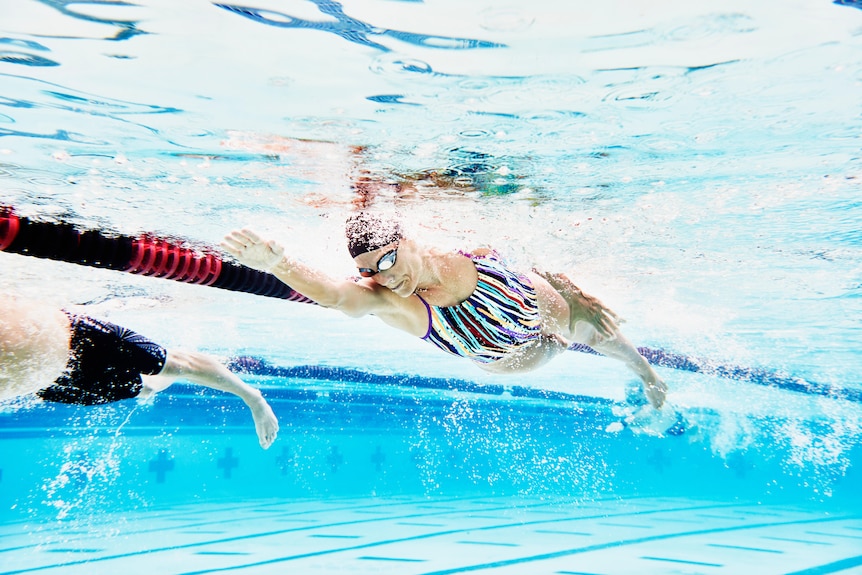
People of all ages and stages benefit from exercise. ((Getty Images: Thomas Barwick)
But no matter what you measure it against, Australians simply don’t move enough, according to Stuart Biddle, professor of physical activity and health at the University of Southern Queensland.
“Our environment is discouraging us from being physically active,” Professor Biddle said.
“We have too many cars, too much automation, too much sitting. Even though there are opportunities to be physically active, most people don’t.”
According to the Australian Institute of Health and Welfare, 37 percent of people aged 18-64 and 57 percent of people aged 65 and over do not meet physical activity guidelines.
Professor Biddle said that in general, young people were more physically active than older Australians.
“Physical activity is very important for the body and mind, and we should not underestimate how important it is,” he said.
“You can’t say: ‘I was physically active 10 years ago, I’m not physically active now, but it doesn’t matter”.
“You’re either physically active now and reaping the benefits, or you’re not.”
Start an exercise routine at any age
All three experts said there are significant benefits to starting exercise at any age and continuing physical activity throughout your life.
Looking at the findings in her study, Dr. Nguyen said that especially for middle-aged women, staying active can help protect against early death.
But she admitted it wasn’t always easy for the group to adjust to the new practice schedule.
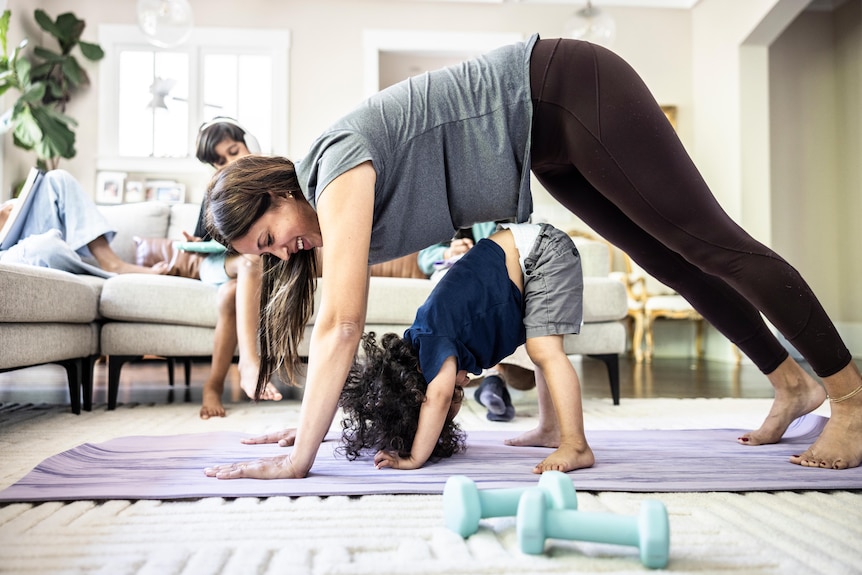
According to experts, it’s never too late to introduce a new exercise routine. ((Getty Images: Momo Productions)
“There’s a lot going on, they might be taking care of the kids, they might be taking care of the parents, they’re also working, they’re juggling a lot, physical activity can be neglected,” she said.
Professor Biddle added that regular exercise helps people “achieve a better quality of life, not just quantity of life”.
“Physical activity is very important for the body and mind, and we should not underestimate how important it is,” he said.
Dr. McVeigh said the best type of exercise is the one that actually does it.
“Find something you enjoy, fit it into your day, and build from there,” she said.
“Aim for a 30-minute brisk walk five days a week, lift weights or do bodyweight exercises twice a week, and incorporate some balance or yoga.”
And it’s never too late to start exercising, even if you’re already in your 40s or 50s, Dr. McVeigh added.
“The children may be older, you know better,” she said.
“The investment you make in your body now directly shapes how vital, independent and healthy you feel for the next 30-40 years.“
#Evidence #Exercise #cuts #middleaged #womens #risk #death