Toolbox: Every ride has its weather kryptonite—conditions that make a good ride suffer. But beyond personal preference, is there really any ideal temperature For performance? And does your body respond differently depending on whether you ride in the cold or the heat? In today’s Toolbox, we examine the science of ambient temperature and endurance, looking at how conditions affect performance—and why men and women may not respond the same when the mercury rises…or falls.
~ We all have an ideal temperature for our cycling, but is there a physiologically optimal temperature for exercise? And can there be a difference between men and women?
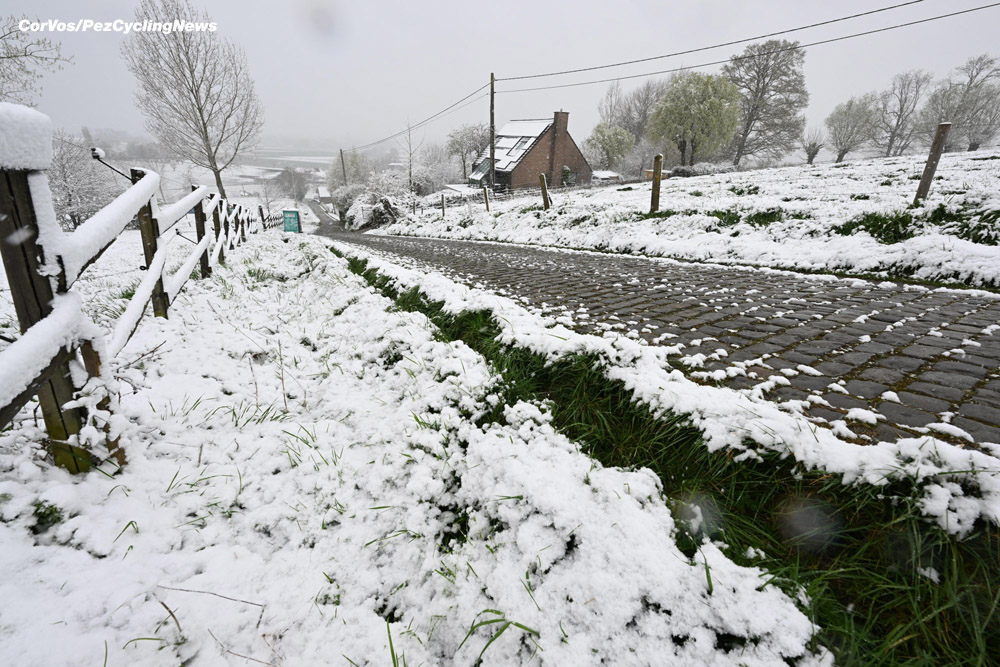
Snow, rain, cold wind, gray sky…. Not enough!
We all have our weather kryptonite when it comes to cycling – that set of conditions that make your ride feel absolutely terrifying. For me, my kryptonite is days that are 2-4 degrees Celsius, gray skies with no sun to warm me, and cold winds that seem to fall in on me no matter how I wrap up. I actually ride on a sunny but sub-cool day.
Much of this preference or dislike comes down to personal experience and cultural background. But is there a physiological component as well? Does your physical capacity depend on temperature?
Click on the video below!

References
Sandsund M et al. Effect of ambient temperature on endurance performance while wearing cross-country skiing clothing. Eur J Appl Physiol. 112(12):3939-3947, 2012.
Renberg J et al. Effect of ambient temperature on female endurance performance. J Thermal Biol. 45:9-14, 2014
copy
Like the baby bear in the “Three Bears” fairy tale, we generally like things with pleasure, and this applies to many of us who have a passion for exercise. But does our physiology and actual performance work best at a certain ambient temperature?

In today’s episode, we’ll look at two studies that tested exercise in men and women over a wide range of temperatures. Is there an optimal temperature for exercise, and is that temperature the same for men and women?
Our bodies are optimized to operate within a very narrow range of internal temperatures, such that our physiological and behavioral thermal systems are designed to keep ourselves within this narrow window of temperature whether we are resting or exercising, whether we are tropical or arctic. Of course, when we are cold or when we are hot, sweating consumes extra energy, so the natural question arises whether there is a suitable ambient temperature for exercise. Studies since the mid-1990s suggest that around 10 degrees Celsius is optimal, and that the warmer or colder it starts to decrease performance. All these studies were conducted in men, so another interesting question is whether there are gender differences, since women have different responses to heat stress.
A pair of Norwegian studies in 2012 and 2014 examined both of these questions, one testing 9 well-trained endurance male cross-country skiing or orienteering athletes and the other 9 well-trained endurance women from the same sports and using the same methodology. The test was conducted at 6 temperatures, from 20°C to -14°C. The test consisted of treadmill running at warm-up speed, 4 different speeds to test running economy and lactate threshold, and then a final hard incremental speed to fatigue to test maximal aerobic capacity and exercise tolerance. Standard cross-country ski racing clothing is worn, with extra gloves and neck warmers for cool conditions to prevent withdrawal due to discomfort. Women were examined during the luteal phase of their menstrual cycle.
Let’s first look at the 2012 study of men. The graph shows the endurance time in seconds for each of the six temperature conditions. We see a general upside-down U pattern, with the best performance at 1 and -4°C, with progressively worse performance as we move to either warmer or warmer temperatures. A similar increase in running speed was also observed in the lactate range at -4, while running economy generally worsened at higher temperatures. However, no difference in VO2max was observed. This pattern of up-down U in function with temperature supports similar studies in men, although the optimal temperature here is lower than in other studies. What’s really interesting though is the absolute lack of difference in any of the measures in the 2014 female study despite the same methods and the same athletes.
This study was unique in testing a known observation in men and see if it also exists in women. The authors were puzzled as to why male performance was affected by ambient temperature while female performance was apparently unaffected. In the heat, it may be that women, despite having less sweat in general, are more efficient in evaporation, thus not affected by dehydration as much as men. When it was cold, women had lower skin temperatures and more body fat for insulation, so they probably lost less heat than men. However, this study re-emphasizes that women are not mini-men, and we urgently need to study their unique physiology in environmental physiology and health research.
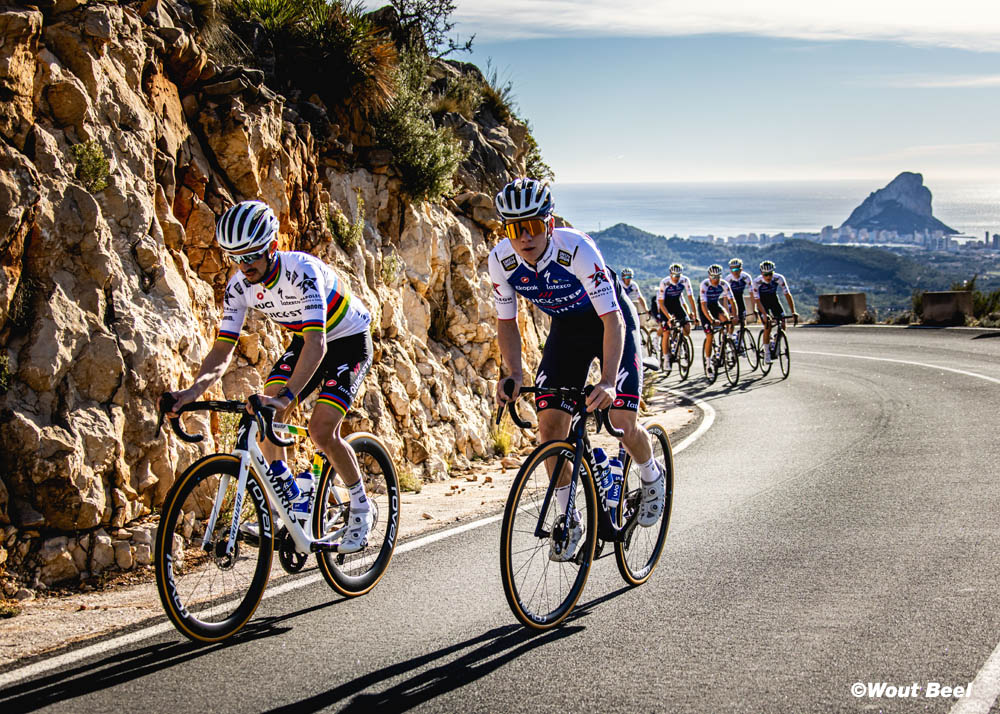
Warm weather training please
Like PEZ? Why not subscribe to our weekly newsletter to get updates and reminders about what’s happening in road cycling?

#temperature #cycling #performance #PezCycling #News